-
Burcu Sülek
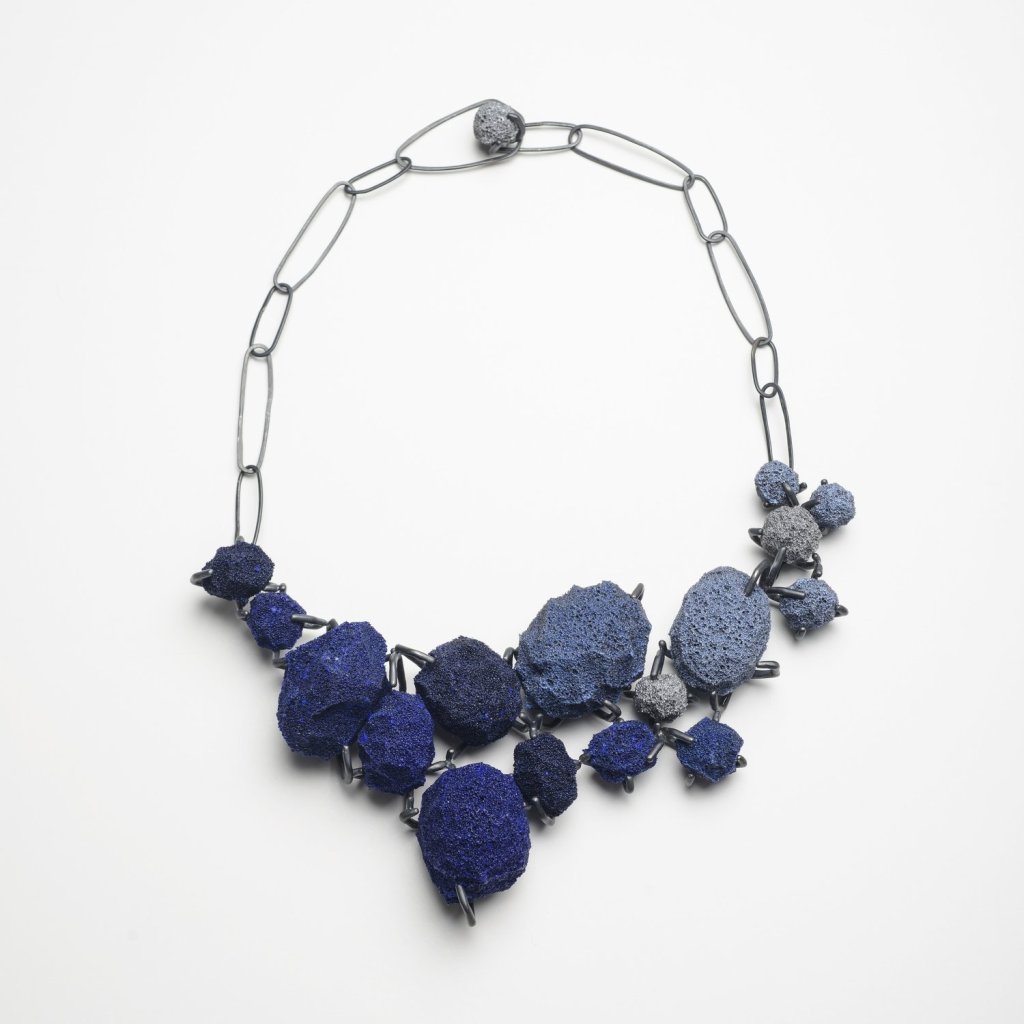
Burcu Sülek embraces contemporary jewelry as a medium of liberation. One that empowers her to make without limits, guided purely by intuition and personal vision. The use of synthetic sponge in her work is a testament to this freedom. With its vibrant color range, soft texture, and featherlight weight, the material offers endless possibilities for…
-
Anu Samarüütel
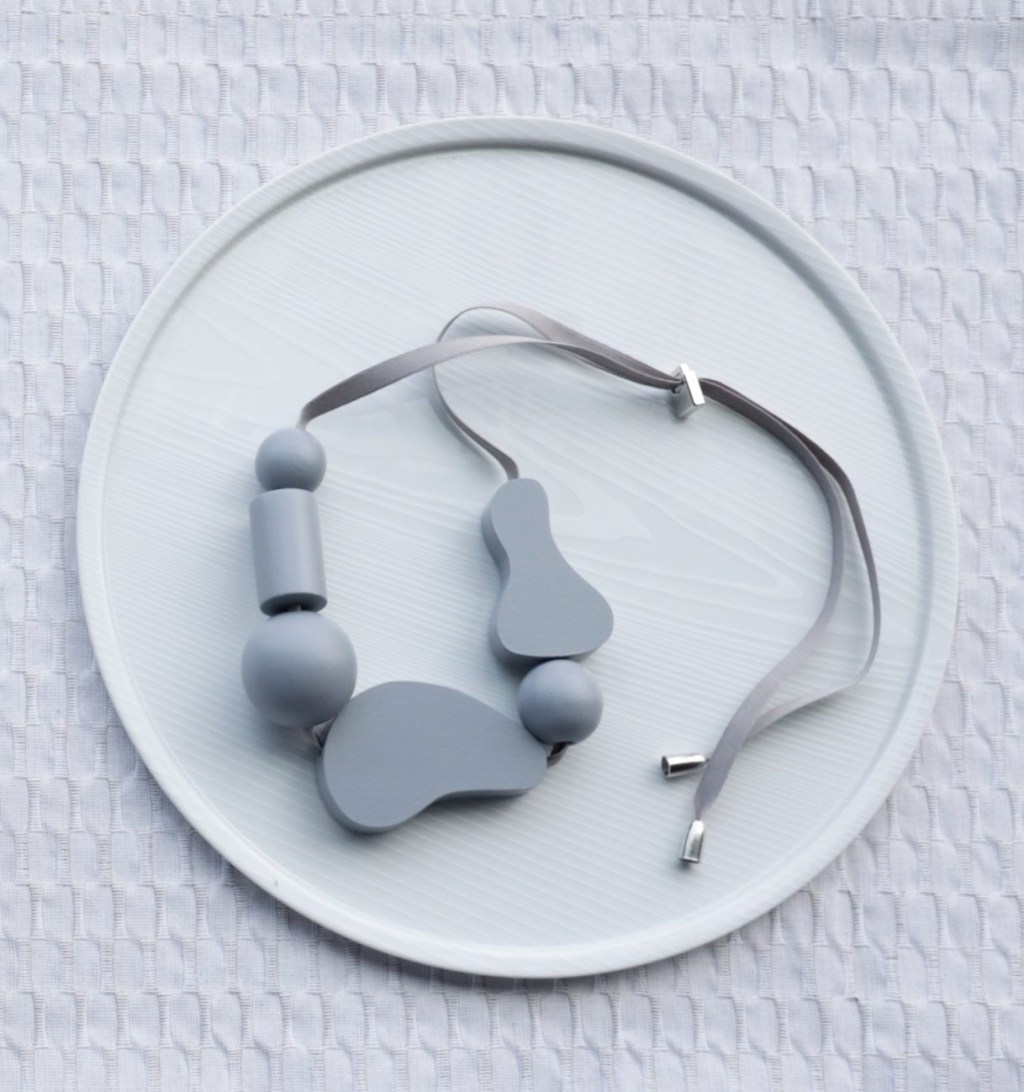
Anu Samarüütel’s necklace presents a study in form and material, where sculptural elements come together in a balanced yet playful arrangement. The matte surfaces and soft, neutral tones evoke a sense of quiet elegance. The irregular shapes add a dynamic quality to the composition. The juxtaposition of smooth, rounded beads with fluid and asymmetrical forms…
-
Dimitar Stankov
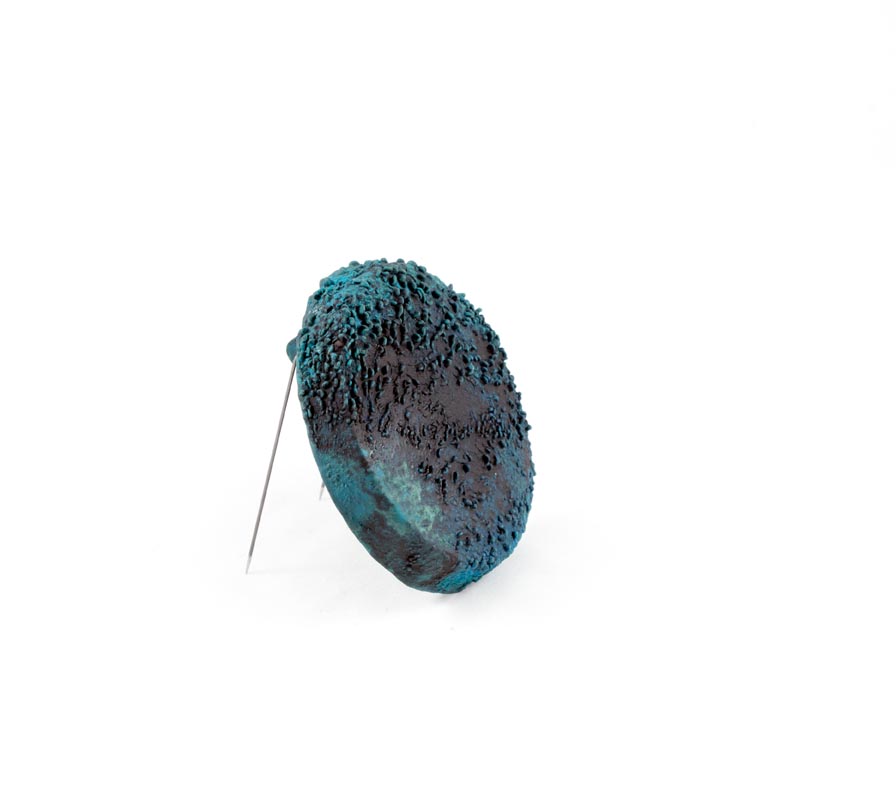
Dimitar Stankov’s Kabada brooch is an exploration of material transformation, where time and the elements leave their mark on metal. The surface, richly textured and layered with a deep blue-green patina, evokes a sense of history and organic decay. The carefully controlled oxidation process reveals an interplay of color and texture, with raised details that…
-
Emika Komuro
Emika Komuro’s brooch evokes a quiet sense of nostalgia, where delicate forms and subtle hues capture the essence of longing. Two fan-like structures, rendered in soft gradients of blue enamel, unfold like petals in bloom. Their pleated surfaces, reminiscent of rippling water or the gentle folds of fabric, suggest movement and fragility. Above them, silver…

-
Sue Ibars
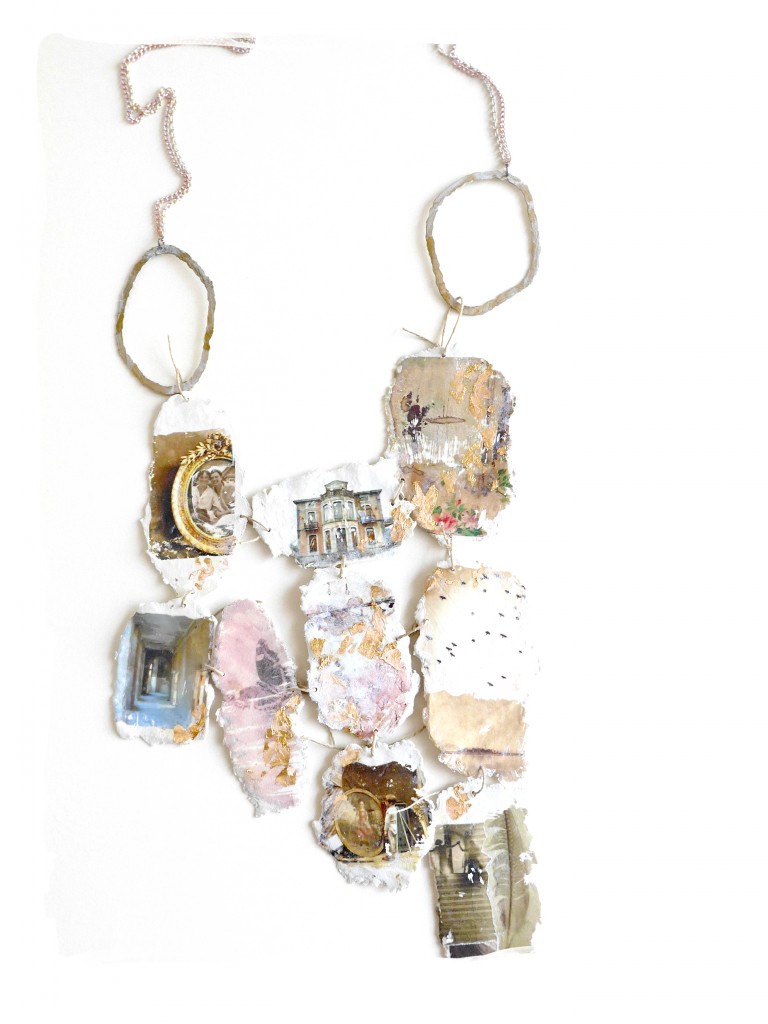
Sue Ibars’ necklace, Melting Point (2014), explores ideas of memory and deterioration. The necklace is composed of irregularly shaped panels that resemble torn paper or aged surfaces. These pieces are layered with images of architecture, classical paintings, and decorative motifs, some of which are partially obscured or worn away. The edges are rough and uneven,…
-
Yuko Fujita
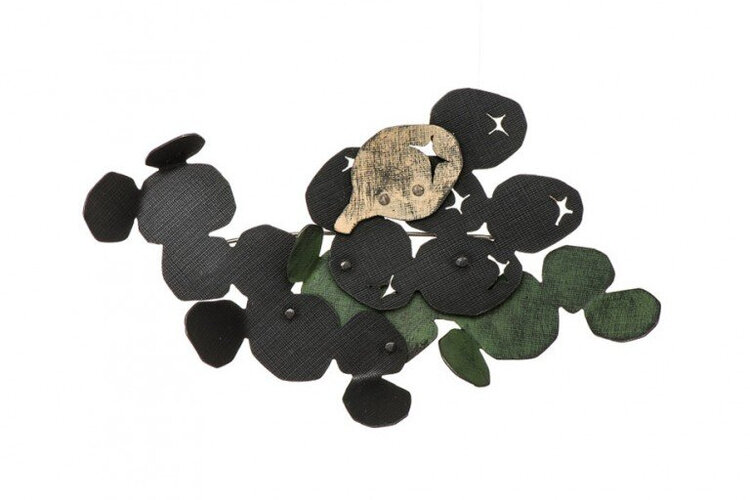
Yuko Fujita’s brooch unfolds as a quiet enigma. Its layered composition evokes a delicate tension between organic form and abstracted narrative. Dark, petal-like shapes cluster together in a rhythmic arrangement, their subtle textures suggesting fabric, foliage, or something in between. Small punctures cut into the surface, allowing light to slip through, creating a sense of…
-
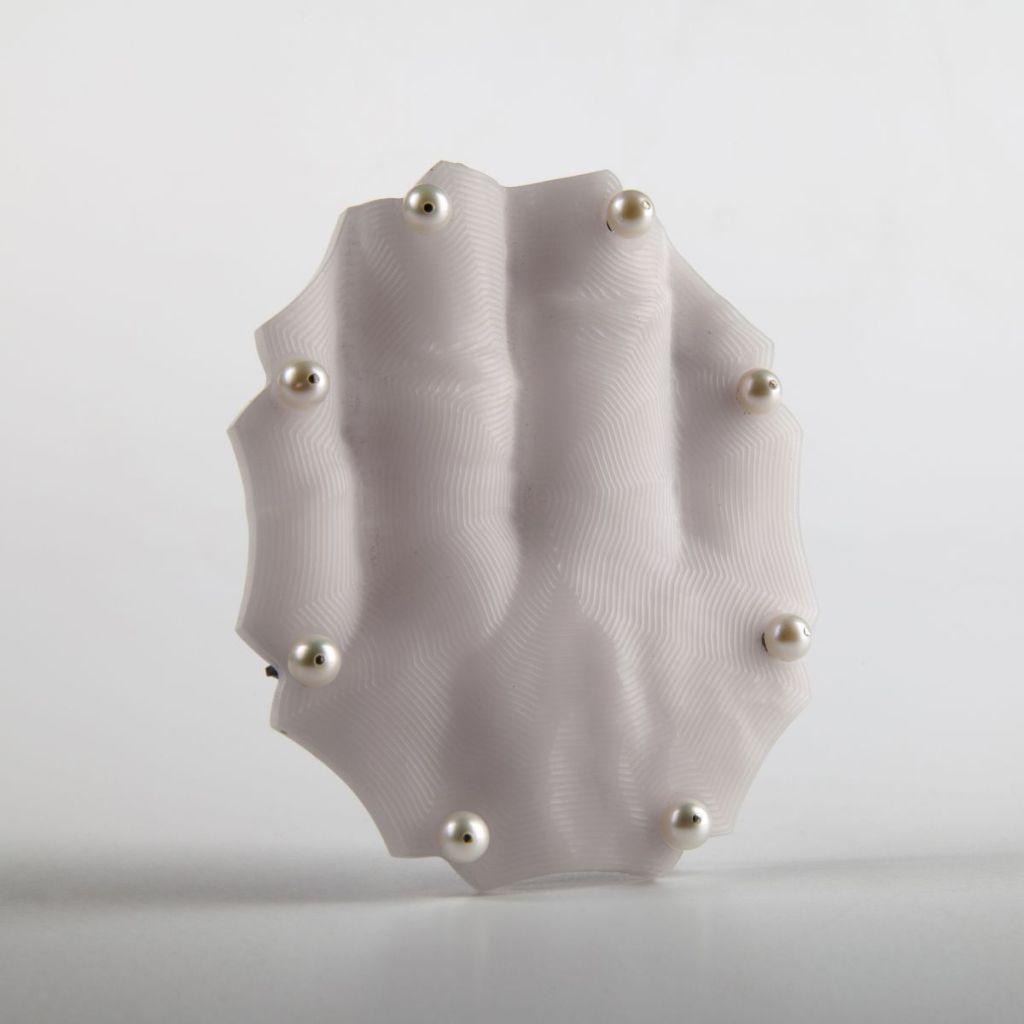
Peter Machata’s brooch is a striking exploration of form and material, blending traditional elements with contemporary innovation. The corian, a material more commonly associated with industrial applications, is shaped into an undulating surface that mimics organic movement. Its delicate patterning, reminiscent of natural growth or topographical mapping, gives the brooch a sense of fluidity despite…
-
Agnes Larsson
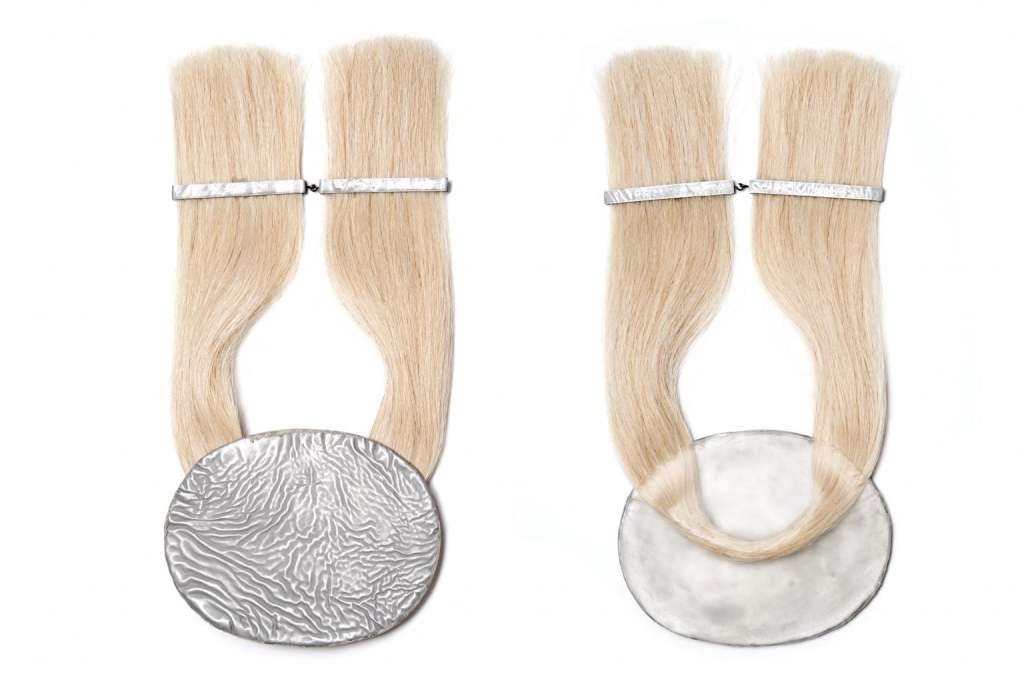
This piece from Agnes Larsson’s Remains series challenges the expectations of materiality and transformation. The necklace, composed of aluminum, pure skin, horsehair, and iron, blurs the boundaries between softness and rigidity. The aluminum surface, typically strong and reflective, takes on the quality of weathered skin, its wrinkles capturing a sense of time and erosion. The…
-
Melanie Georgacopoulos
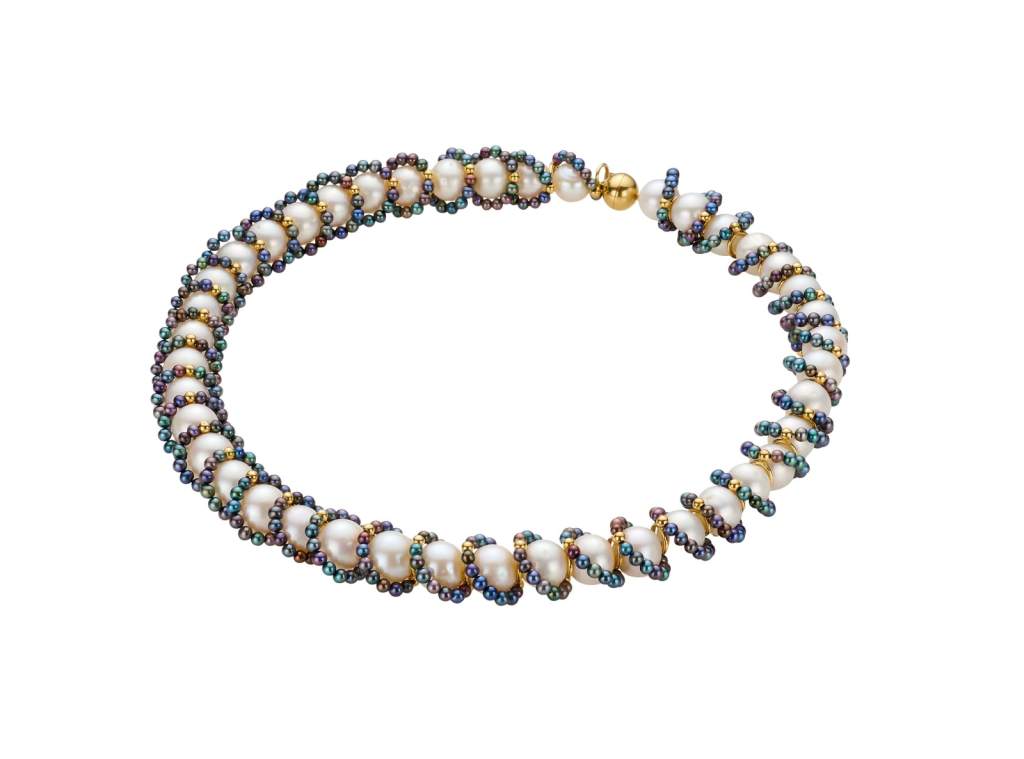
Melanie Georgacopoulos reimagines the pearl necklace with a sculptural sensibility that honors tradition while pushing its boundaries. This piece balances classic elegance with an unexpected interplay of form and texture, weaving iridescent peacock pearls around lustrous white freshwater pearls in a rhythmic spiral. The 18 karat gold accents punctuate the composition, enhancing its luminous depth…
-
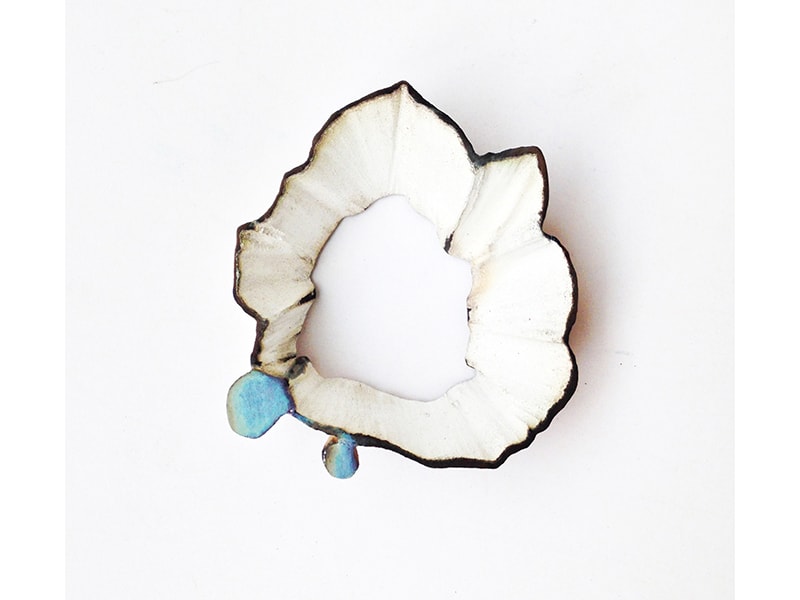
Flóra Vági
Flóra Vági’s jewelry feels like a relic from an unknown past, an object shaped by time and transformation. This brooch, with its charred edges and soft white surface, suggests a delicate balance between destruction and renewal. Its irregular form recalls the natural erosion of organic materials, while the striking blue accent at its base introduces…

More than decoration. Contemporary art jewelry as desire, discourse, and discovery.
 Eating Diamonds