
Eating Diamonds
-
Liz Leupold
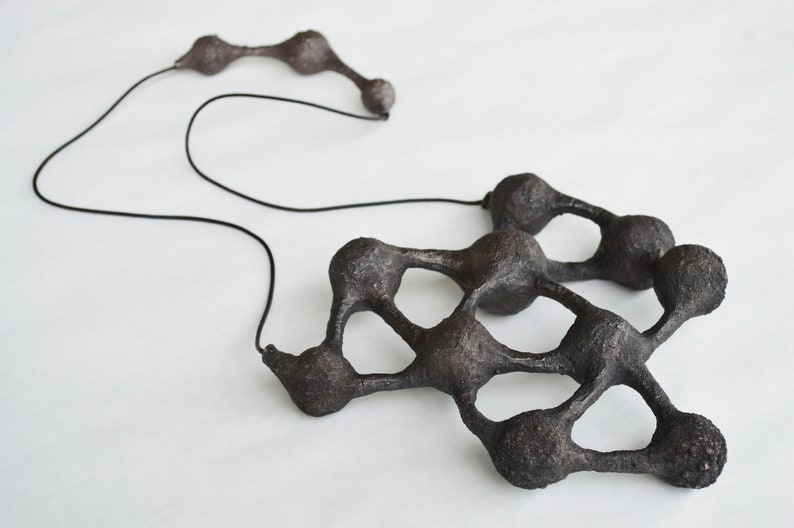
Liz Leupold’s Interconnection necklace is a striking study of form and structure, where organic shapes emerge through the electroforming process. The pendant’s web-like composition of linked copper spheres suggests molecular networks, coral formations, or even constellations, reinforcing the idea of unseen connections that shape the natural world. Darkened to a rich patina, the surface has…
-
Catarina Silva
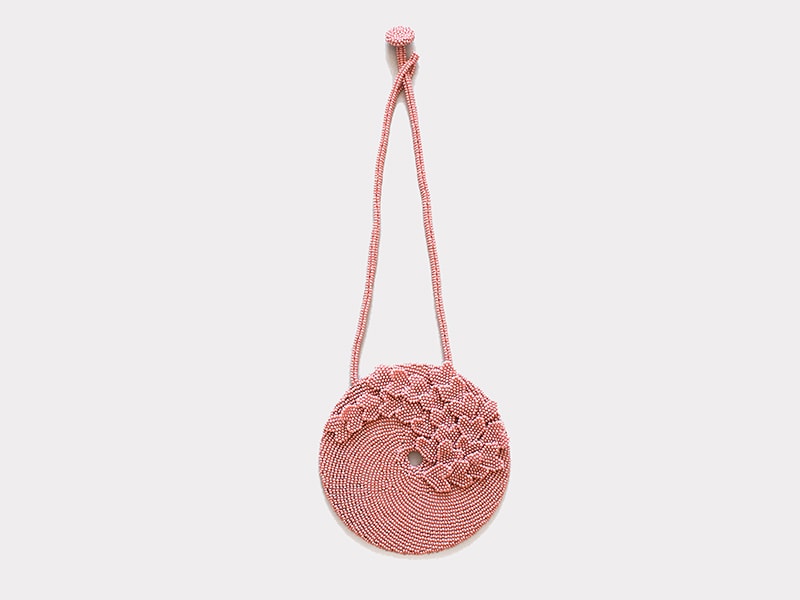
A song you cannot hear but can feel, Mantra Love Song transforms rhythm into form. Catarina Silva stitches together time and memory, weaving glass beads in a spiral that echoes both the grooves of a record and the whorls of a seashell. The compact disc at its core, once a vessel for sound, becomes a…
-
Rita Soto
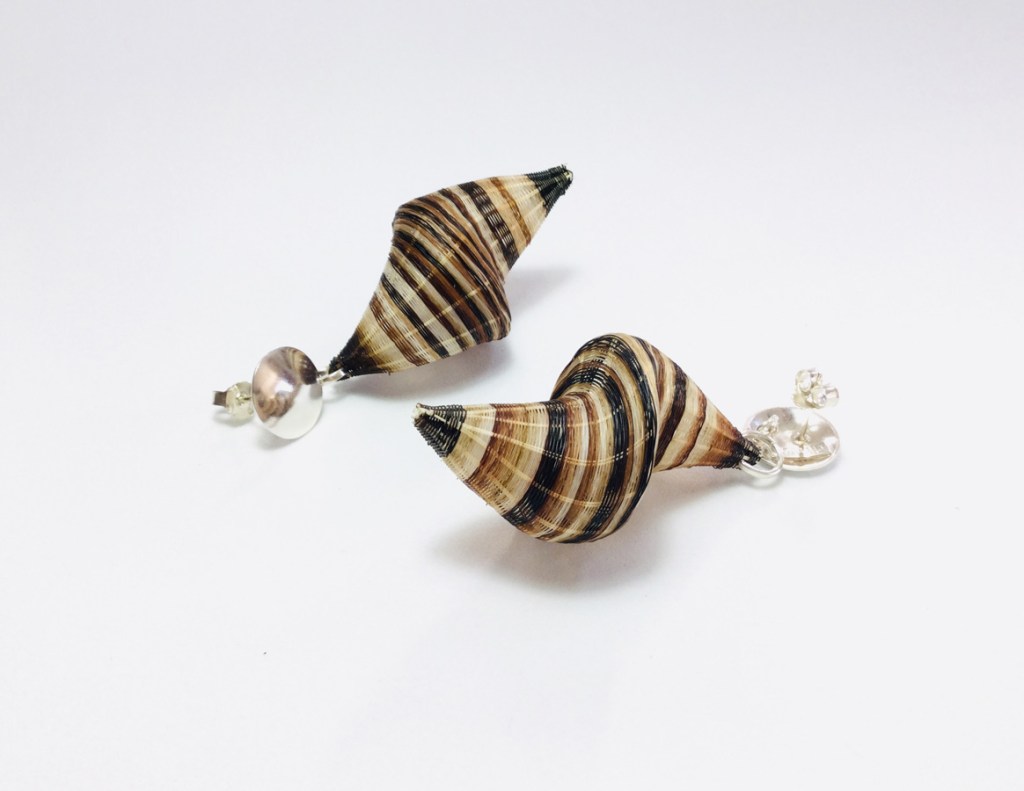
Rita Soto’s work is a study in patience and precision. Using the intricate Chilean technique of horsehair micro-basketry, she transforms strands of fiber into sculptural, lightweight forms that seem to defy their material origins. The process is slow and meticulous, each piece woven with an acute awareness of texture, movement, and the interplay of light.…
-
Trinidad Contreras
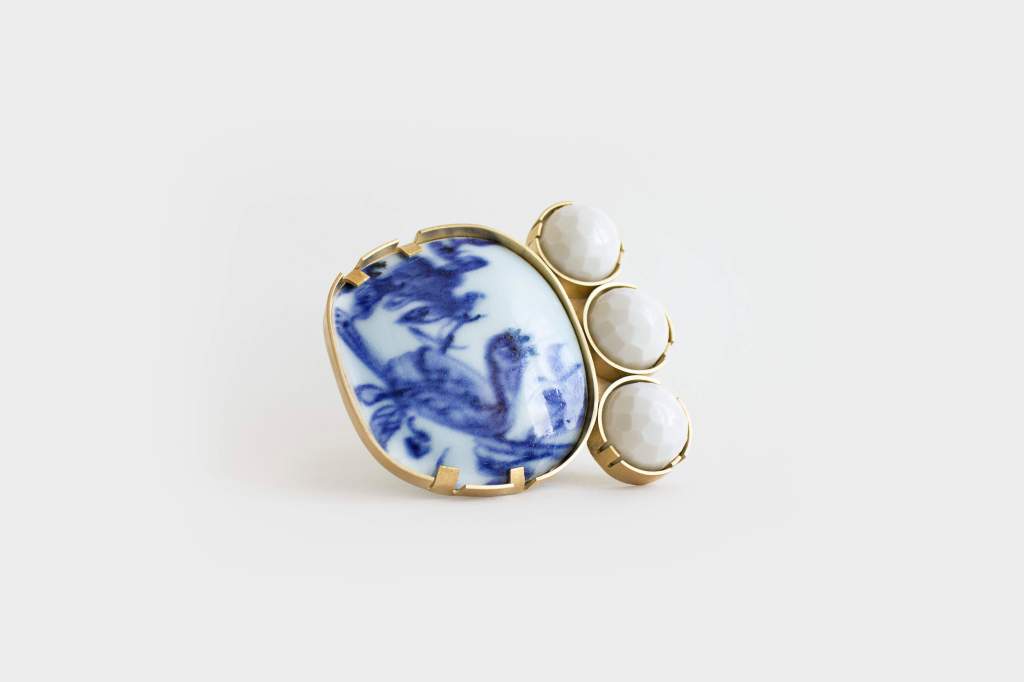
Fragments of history find new meaning in Stupa I, a brooch by Trinidad Contreras created for The Palace of Shattered Vessels. A shard of ancient Chinese porcelain, once part of a grand vessel, is framed in 24 karat gold-plated brass, bridging the past with the present. The deep cobalt blue of the painted motif contrasts…
-
Charlotte De Syllas
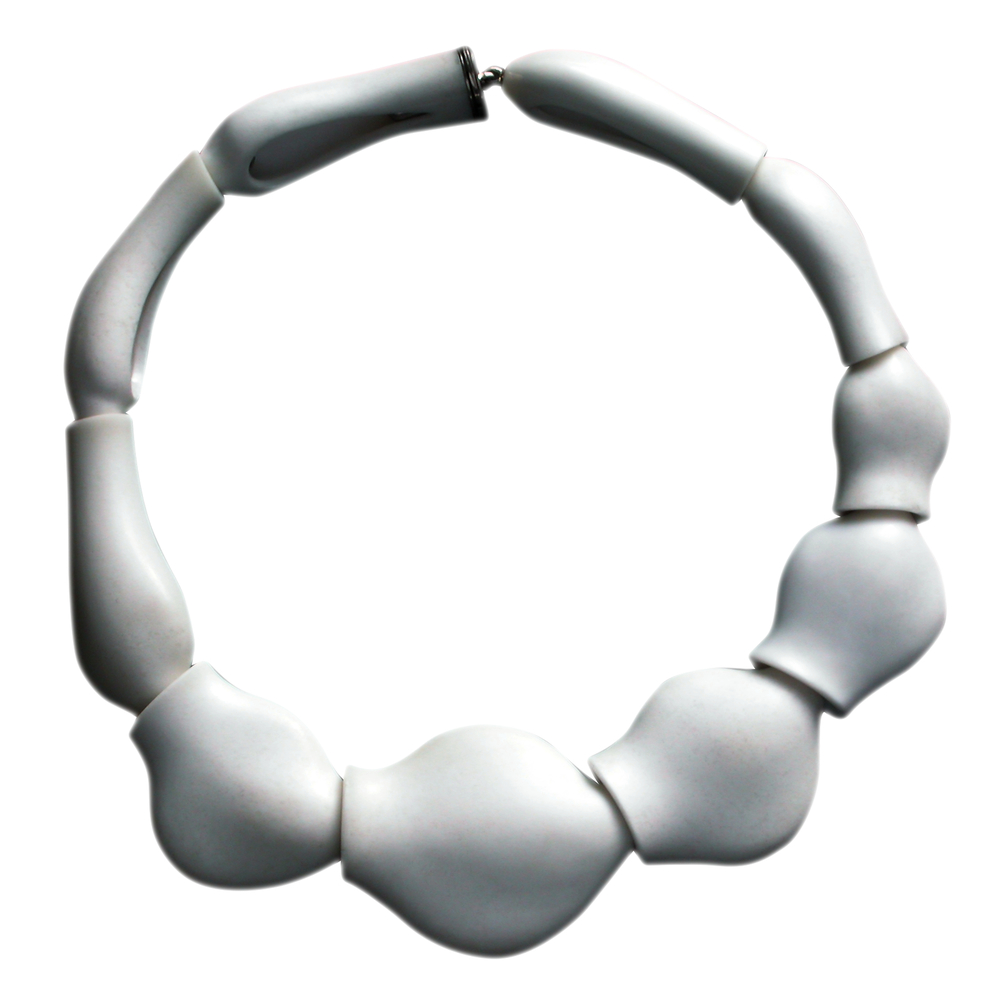
Jewelry is often an accent, but Charlotte De Syllas treats it as sculpture in its own right. The Cacholong Necklace (2005) is a study in form and material, carved with an understanding of both the body and the natural world. Its smooth surfaces and undulating curves recall water-worn stones or the softness of bone, transforming…
-
Maria Zureta
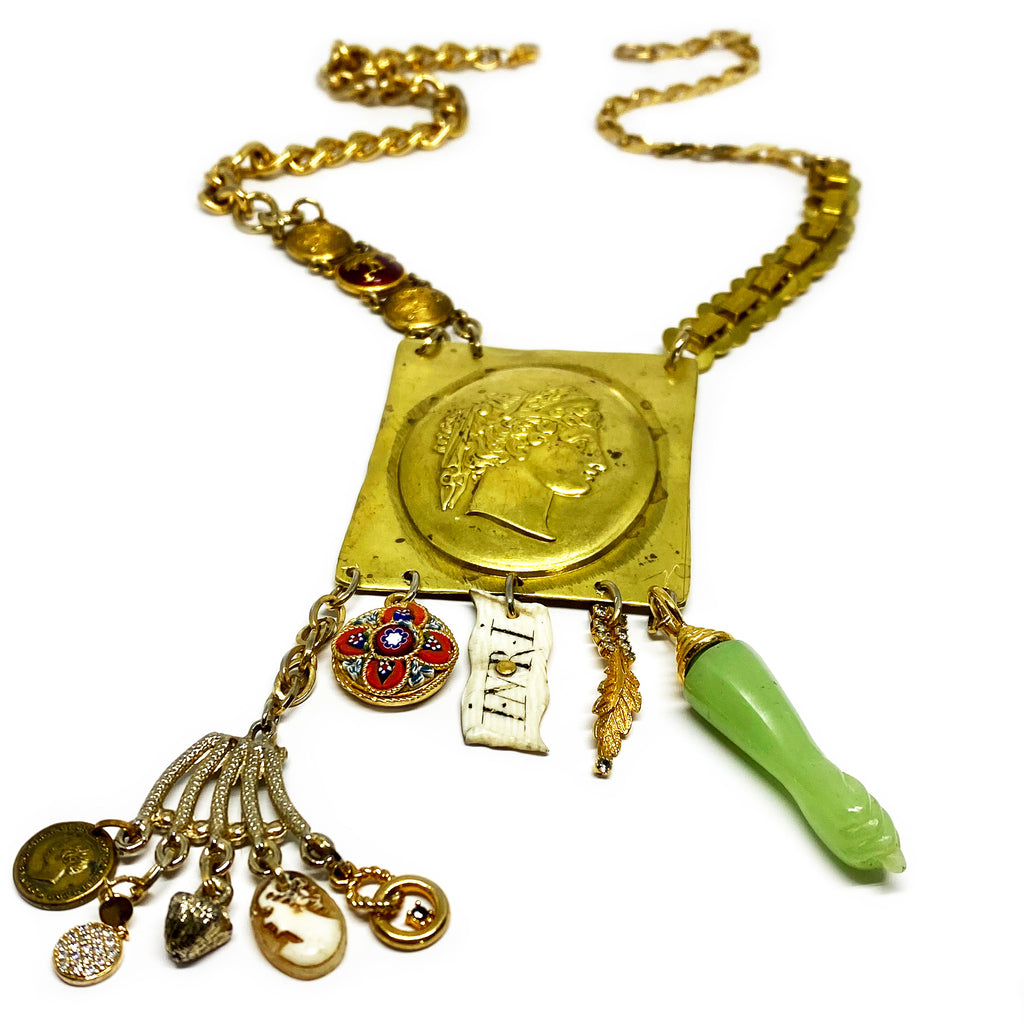
Maria Zureta’s necklace is a collision of histories. A collection of symbols gathered from different times and places, all bound together in a single composition. At its center, a vintage metal casting shows the profile of a Greek figure, evoking the weight of antiquity. Suspended from it are an eclectic mix of charms. A micro…
-
Kazumi Nagano
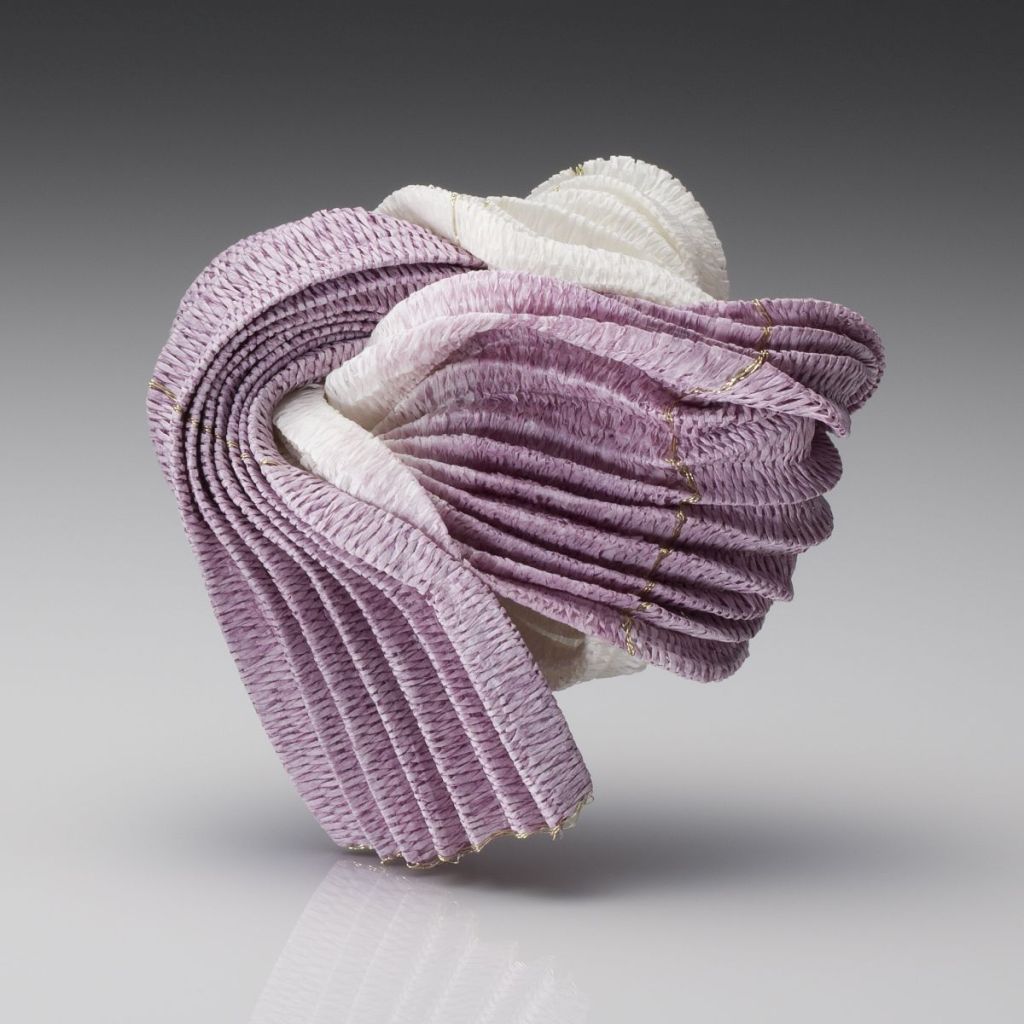
Kazumi Nagano’s brooch captures a moment of movement, as if a delicate fabric has been caught mid-twist and suspended in time. Woven from bamboo grass paper, nylon threads, silver, and gold, the piece balances fragility with structure. The soft gradient from lavender to white flows through its carefully pleated folds, while fine gold threads trace…
-
Iro Kaskani
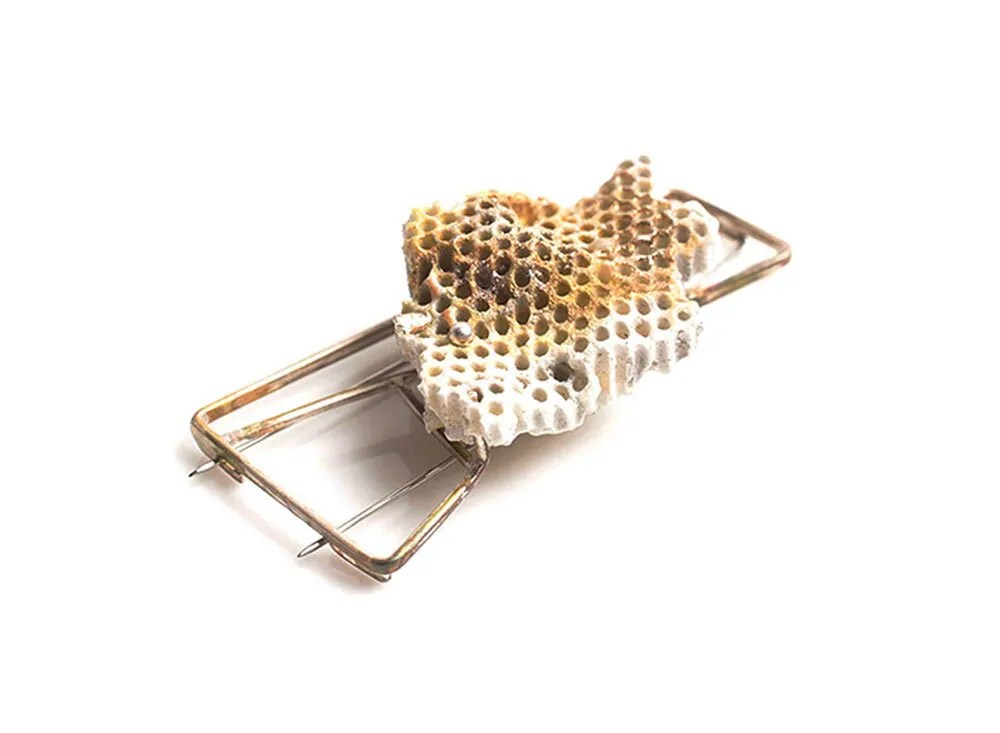
Iro Kaskani’s brooch captures the beauty of natural decay, transforming it into something fragile and enduring. A porous honeycomb-like form resembling coral bone or eroded stone rests within a simple geometric metal frame. The contrast between the organic weathered texture and the rigid structured setting highlights the tension between nature and design. The brooch feels…
-
María Ignacia Walker
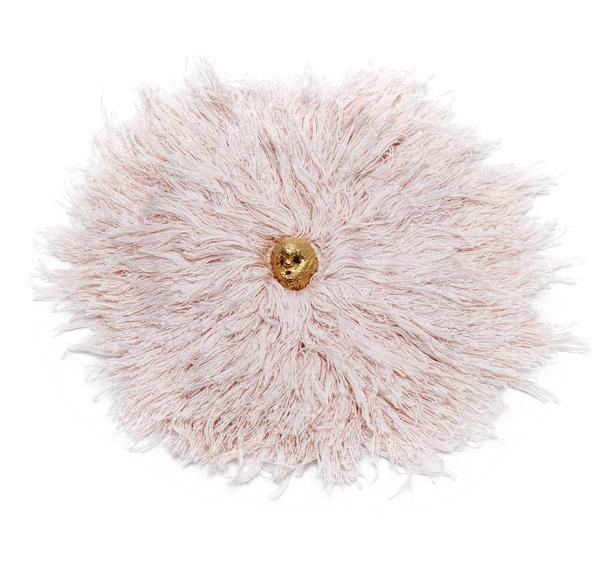
Memory is fragile. It is often soft around the edges, yet certain moments hold a weight that lingers. In the series, From Memory, María Ignacia Walker captures this tension through a brooch that feels both delicate and grounded. Pale, feathery fibers radiate outward in a soft, cloud-like form, their movement contrasted by a dense, golden…
-
Marlene de Beer
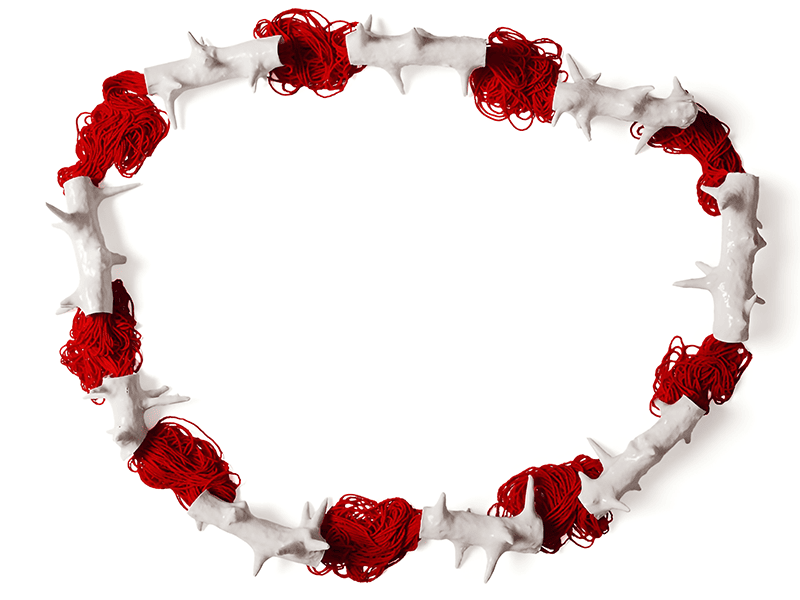
Marlene de Beer’s Thicker than Water (2017) uses natural forms to explore the complexity of human relationships. Crafted from porcelain and red beads, the necklace features sharp thorn-like branches linked by dense clusters of tangled red threads. The porcelain thorns, modeled after South African thorn trees, symbolize both protection and danger, while the vivid red…
 Eating Diamonds